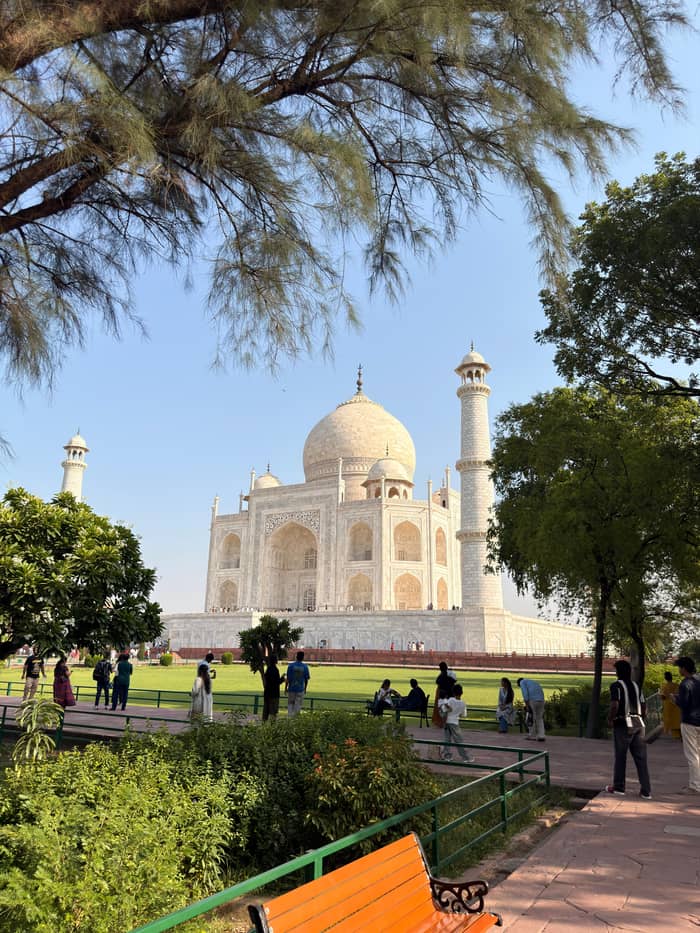
Born 1593
Mumtaz Mahal
The reason for the tomb
- Died1631
- PlaceBurhanpur
- Moved to AgraSix months later
Guides
Language
Currency
Check open spotsstarting at $5 · free cancellationChecklist to tick off
9-item checklist
Check things off as you go; your progress is kept on this device.
0 / 9 ready
All ticked. Only the booking is left: your sunrise at the Taj Mahal.
Book a spotWork began around 1631 and the tomb was finished in 1648. Here is who it was for, who built it, what it is made of and how it was repaired, in a read short enough to finish before the queue moves.
Editorial team, tajmahalsunrisetour.quest · Updated November 7, 2026 · Quick read: 6 min
Key facts
The Uttar Pradesh tourism site says construction of the complex began about 1631 and that the principal mausoleum was completed in 1648.1,2 The outlying buildings and gardens were finished five years later, in 1653.3 So the answer to how long it took to build the Taj Mahal depends on the definition: the white tomb on its own, or the whole complex with its gateway, mosque and garden.
The Ministry of Tourism's Incredible India page puts the construction at 17 years.6 That figure fits the span from the start of work to the completion of the mausoleum, and it leaves the garden years outside the count. For a visitor, the plain rule is to quote the official dates, 1631, 1648 and 1653, and to treat the 17 years as the page's own summary.1,2,3,6
The Taj Mahal construction time period matters for how you read the site. The gardens, the long pool and the gateway are later in the sequence than the dome, and they were designed to frame it. Walk from the gate to the tomb and you retrace the order in which the complex was finished, with the mausoleum as the first great statement and the garden as its setting.
| Question | Answer | Official source |
|---|---|---|
| Construction began | About 16311 | UP Tourism |
| Tomb completed | 16482 | UP Tourism |
| Workers | About 20,0004 | UP Tourism |
| Workers, other page | 22,00014 | Incredible India |
| Outer dome height | 44.4 meters15 | UP Tourism |
| Complex area | 17 hectares16 | Incredible India |
| Restoration done | 190810 | UP Tourism |
The two official pages disagree on the number of workers; the other figures are as each page states them.
The monument is a tomb. Incredible India says Mumtaz Mahal was born in 1593 and died in 1631, during the birth of her fourteenth child at Burhanpur.7 Her body was first buried in the Zainabad garden, and six months later it was moved to Agra and placed in the crypt of the main tomb.11 The Taj Mahal is the mausoleum of both Mumtaz Mahal and Shah Jahan.12
Shah Jahan was the emperor who commissioned it. The official page on the maker of the Taj says he ruled India from 1628 until 1658.13 He died at Agra on 22 January 1666 and is buried in the Taj Mahal.8 That makes the monument both a memorial to a wife and, in the end, the resting place of the man who ordered it, a fact the guides tend to mention at the crypt.
The court chronicles give the story its emotional weight, and the official site calls the monument a symbol of eternal love. Treat the romance as the traditional account and the dates as the record. The dates are what let you place the building: a tomb begun the year its subject died, finished within the next generation of the emperor's reign.
1631
She died in the birth of her fourteenth child, and work on the complex began about the same year.7,1
1648
The principal mausoleum was completed.2
1653
The outlying buildings and gardens were finished.3
1666
He died at Agra and is buried in the Taj Mahal.8
1857 to 1908
The rebellion year brought defacement, and the restoration was completed in 1908.9,10
1983
The Taj Mahal became a UNESCO World Heritage Site.5
The official creation page says a labour force of about 20,000 workers was recruited from across northern India.4 Incredible India gives a different count, 22,000 workers and 1000 elephants over 17 years of construction.14 The two official pages disagree on the number of workers, so read both as estimates. The history page adds that a fleet of 1000 elephants carried material to the site.21
The designer is less certain than the guides suggest. The creation page says history obscures precisely who designed the Taj Mahal, and that in the Islamic world of the time credit for a building usually went to the patron, not the architects.22,23 That is why you will hear several names. The safe statement is that a team of architects designed and supervised the work, and that Shah Jahan was its patron.
The materials come from far and wide. The dominant material is the white marble from Makrana in Rajasthan.17 As many as 28 kinds of precious and semi-precious stones were used in the ornamentation: jasper from Punjab, jade and crystal from China, turquoise from Tibet, lapis lazuli and sapphire from Arabia and diamonds from Panna.18,19 The Taj Mahal diamond history is that of small stones set in inlay, and not of one famous gem.
If I want to know how long it took
About 17 years
Incredible India puts the construction at 17 years.6
If I wonder who is buried inside
Mumtaz Mahal and Shah Jahan
The Taj Mahal is the mausoleum of both.12
If I wonder about the stones
Makrana marble, 28 kinds of stone
White marble dominates, with as many as 28 kinds of stone in the ornament.17,18
If I want the diamond history
Small stones from Panna
Diamonds from Panna are among the inlaid stones.19
If I want to know about repairs
1908, by Lord Curzon
A massive restoration was completed in 1908.10
Born 1593
The reason for the tomb
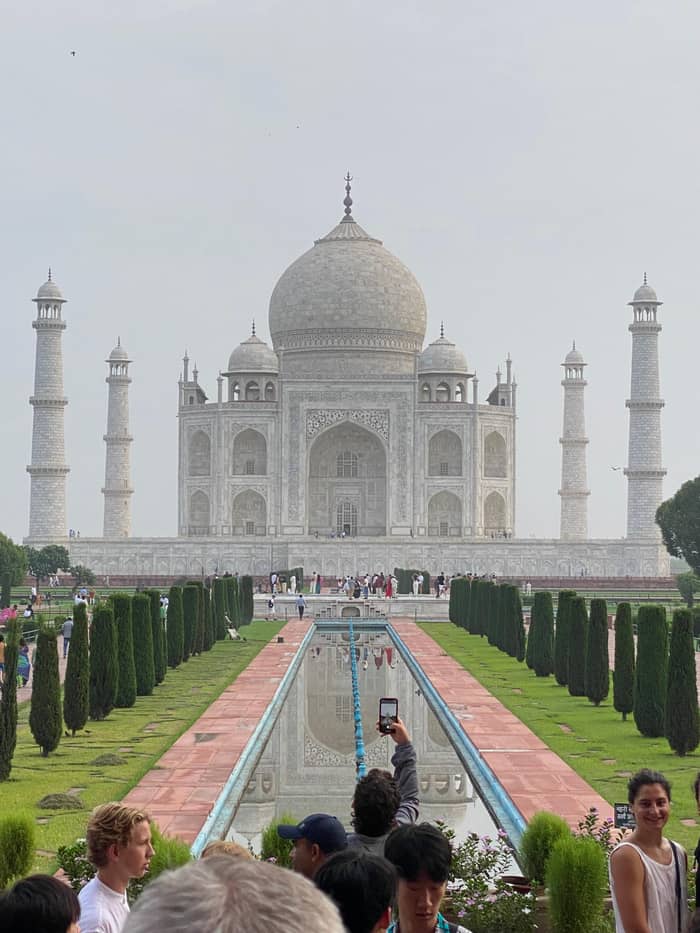
Ruled 1628
The patron
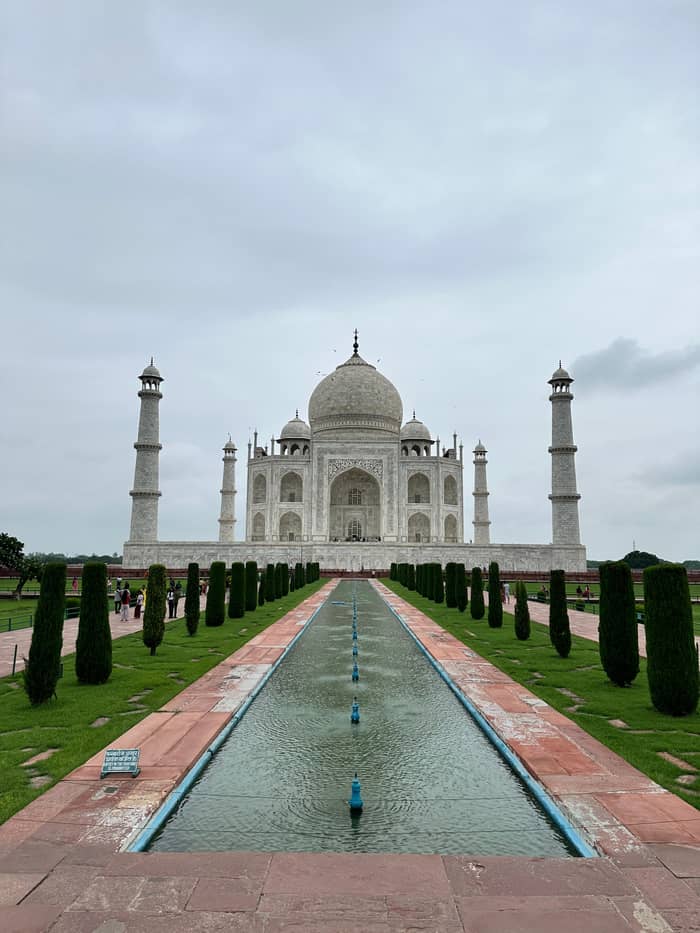
17 years
Marble and inlay
Choosing the site took Shah Jahan nearly six months, and he planned a complex almost a kilometre long.28,29 The tomb stands at the northern end, with greenery and fountains between it and the gateways.30 The whole complex spans 17 hectares of gardens and pathways.16 The river beside it is part of the design: the Archaeological Survey reads the Yamuna as incorporated into the garden for the belief that it is one of the rivers of Paradise.31
The design drew on earlier buildings. The history page names the Gur-e Amir in Samarkand, Humayun's Tomb and Shah Jahan's own Jama Masjid in Delhi as specific inspirations.32 It also says the Baby Taj, the tomb of Itimad-ud-Daulah, was the first Mughal structure built entirely of marble, and that the closest model was Humayun's Tomb, completed some 60 years before.33,34
The dome is the part people remember. The overview page gives the outer dome as 44.4 meters high and the inner dome as 24.35 meters.15 Two domes, one above the other, are the reason the interior feels lower and quieter than the silhouette promises. Photography is prohibited inside the main mausoleum, so what you take away from the inside has to be remembered.26
The monument has not always been cared for. The history page says that during the rebellion of 1857 British soldiers and officials defaced the Taj, chiselling out stones from its walls.9 By the late nineteenth century, parts of the buildings had fallen into disrepair, and the page records the decay as a fact of the period.
The repair came at the end of the century. The page says Lord Curzon, the viceroy, ordered a massive restoration that was completed in 1908.10 The garden was remodeled with British-style lawns around that time, and those lawns are still there. When you walk the garden, you are walking a landscape shaped by that restoration as well as by the original plan.
The monument became a UNESCO World Heritage Site in 1983.5 It is one of three World Heritage monuments in Agra, along with Agra Fort and Fatehpur Sikri, and a visit can be built around all three.35 The Taj Museum inside the complex opens 10.00 AM to 5.00 PM, and entry is free, which makes it an easy place to learn more once the building has your attention.25
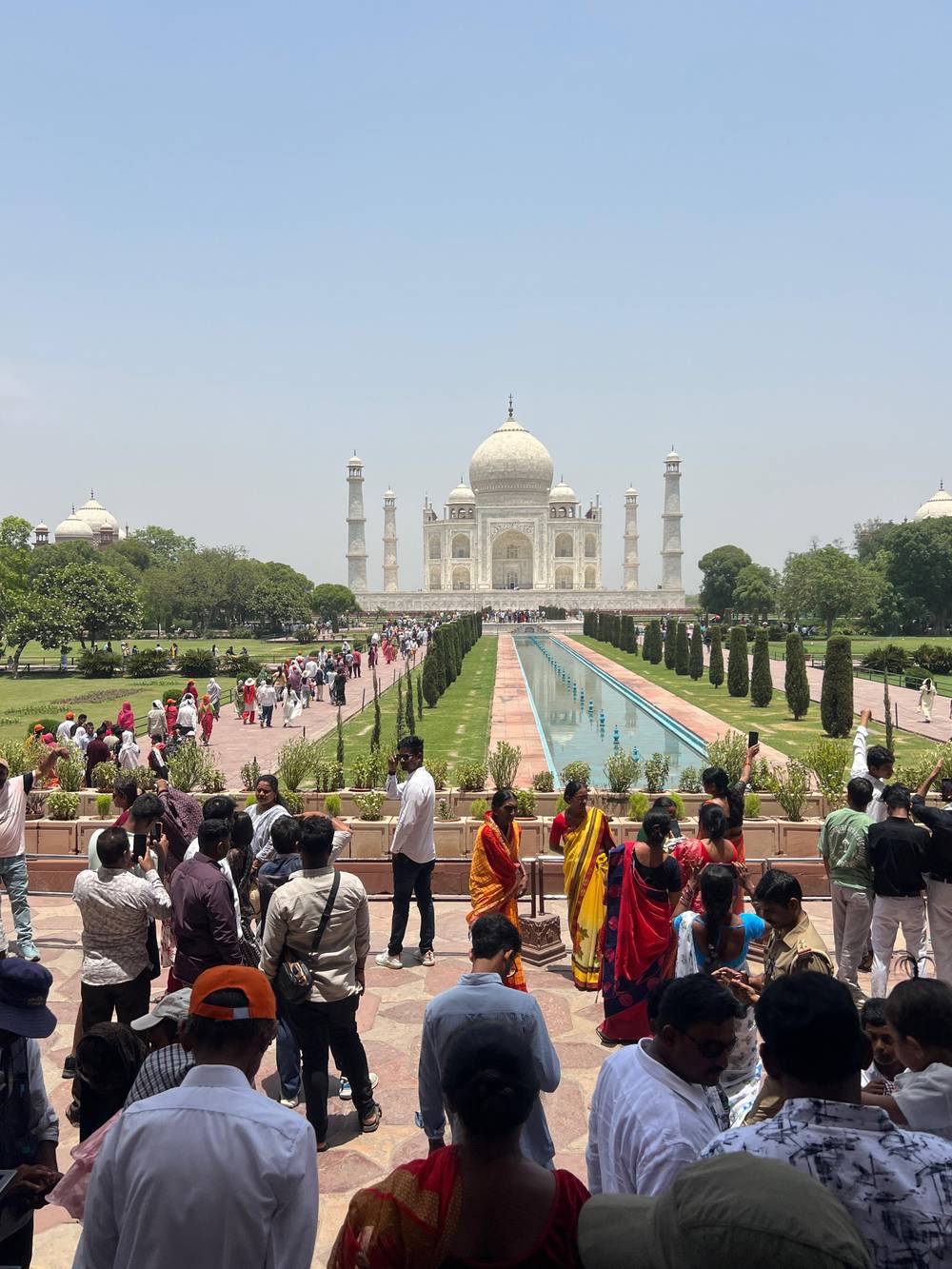
LifeAda English on YouTube · Video data is requested only when you tap play.
be a masterpiece for ages to come, increasing the amazement of all humanity
A short history is most useful at the gate. The monument is closed on Fridays, and it opens 30 minutes before sunrise on the other days.27,36 If you plan to arrive at the first light, you can read this page the evening before and then walk the length of the complex with the order of construction in mind.
The official site describes the colors of the day: pinkish in the morning, milky white in the evening and golden when the moon shines.24 The history gives those colors a reason to be admired, since the marble responds to the light. Standing at the long pool and watching the dome change is the one part of the history that no guide can deliver for you.
If you want the story told on site, a guided tour helps. The sunrise day tour from Delhi lists a live guide and 3 hours at the Taj Mahal. Ask the guide about the architects, the stones and the 1857 damage, and compare the answers with the official dates above.9 A good guide will say where the records are firm and where they are silent.
FAQ
The Taj Mahal became a UNESCO World Heritage Site in 1983.5
The creation page says history obscures precisely who designed the Taj Mahal.22
A massive restoration ordered by the viceroy was completed in 1908.10
Sources
Planning the Taj Mahal at dawn? A real person answers here.